
Uranium in water and its removal
Uranium is a silvery glossy radioactive chemical element belonging to a group called actinoids. It was discovered by Martin Henrich Klaproth in 1789. In pure form it was only isolated in 1841. Uranium is not very hard and can be milled in a normal temperature. In the form of powder it is pyrophoric. The density of uranium is 19,01 g/cm3, which makes it about 70% heavier than lead.
In water uranium occurs naturally as mixture of isotopes. In a relatively high concentration it occurs in salty sea water – 3,3 micrograms per liter. In fresh water his content varies a lot.
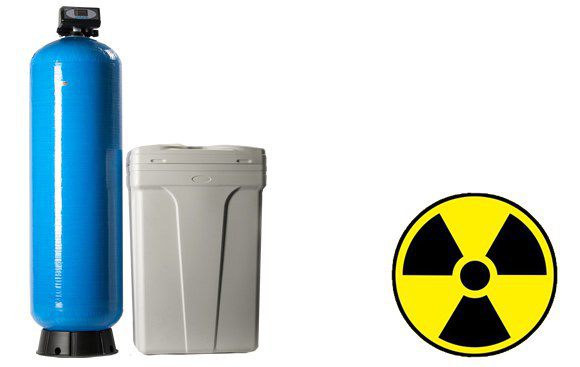
Uranium in water
Uranium concentration in water depends on the type of geological subsoil. The mobility of uranium in water and soil is affected by more factors, such as redox potential or amount of organic and inorganic substances. Uranium dissolves well which unfortunately makes it easy for it to contaminate underground waters.
Advised limits of uranium in drinking water according to WHO
- 1993 – 140 µg/l
- 1998 – 2 µg/l
- 2003 – 9 µg/l
- 2004 – 15 µg/l
Consequences of radiation
When uranium cores fall apart, radiation occurs which can cause health problems to people long-term exposed to it. The can include tiredness, tumors, leukemia or lung cancer.